
The Panini World Cup 2026 sticker frenzy: shortages, black market and why everyone wants to complete the album
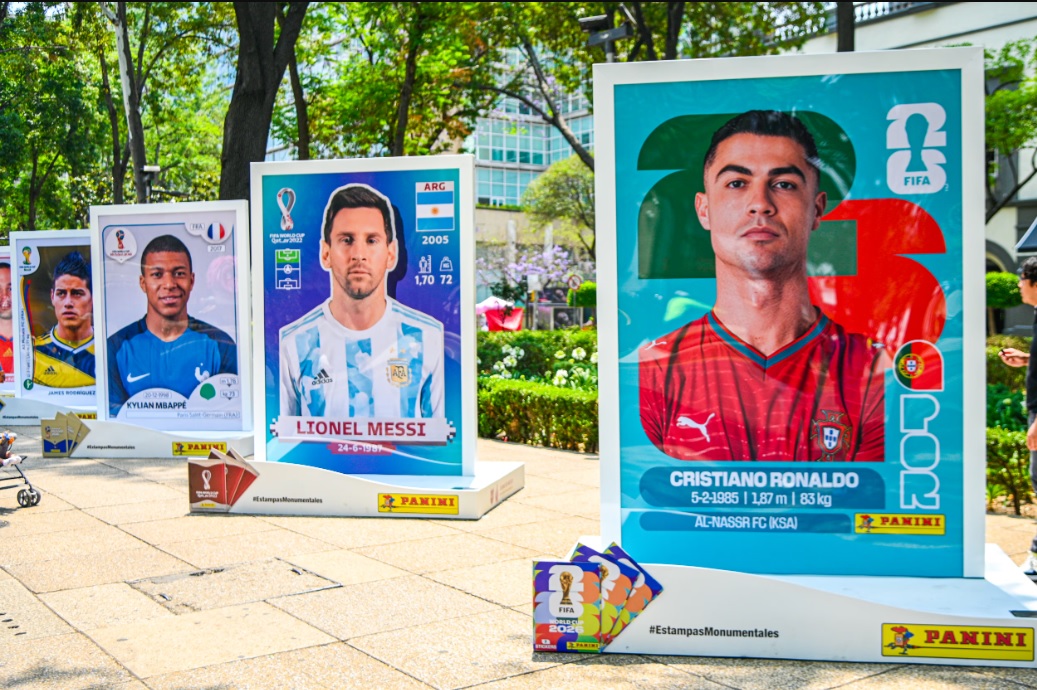
The biggest collectible in football history — 980 stickers, 48 nations, 3 host countries.
There are queues at newspaper stands. There are vendors who drove to Uruguay to get stock. There are packs selling for triple the official price. And there is one sticker — number #00, with an entirely shiny background — that has become the most sought-after of the album's 980 cards. Less than a month before the 2026 World Cup kicks off, the Panini fever is already at its peak. And the question nobody can stop asking is always the same: why does this happen to us every four years?
An album bigger than any in history
The Panini World Cup 2026 album is, by the numbers, the most ambitious the Italian company has produced since launching its first edition at Mexico 1970. With 48 participating nations instead of Qatar 2022's 32, the book grew to 112 pages and 980 stickers — exactly 342 more than the previous edition. Completing it without swaps, buying only packs, can cost over $700 USD according to collector estimates. With well-organized swaps, that figure can drop significantly. The difference between both scenarios is the swap: the social ritual that turns the album into something far beyond sticking cards.
Key figure
980 stickers · 112 pages · 48 nations · 342 more stickers than Qatar 2022 · 7 per pack
The shortage: a story that repeats itself
The script is familiar. It happened at Qatar 2022 and happened again in 2026. The album hit the shelves, sold out within hours, and the panic began. In the first days of May, while supermarkets had normalized stock, kiosk owners reported widespread shortages. Argentina's Kiosk Owners Union (UKRA), representing over 100,000 points of sale, filed a formal complaint with Panini. The accusation: distributors were bypassing the traditional supply chain to sell directly through e-commerce and non-traditional channels. The result on the street was inevitable: albums with an official price of around $15 ARS were selling for two to three times that on Mercado Libre. Packs at the official price were found at triple cost in central Buenos Aires kiosks.
Kiosk owners driving to Uruguay: "This is bordering on madness"
The most striking episode of this edition happened in the first weekend of May. Groups of Argentine kiosk owners crossed the border into Uruguay — where stickers were available and the exchange rate made it convenient — to bring stock back and sell it at their shops. "This is already bordering on madness," one merchant told La Nación newspaper, describing the unprecedented logistics they were deploying just to obtain the product. The image says everything: in the year of the biggest World Cup in history, with football more popular than ever, Argentine vendors needed to cross a river to be able to sell stickers.
The sticker black market: prices that spiral out of control
Alongside the official market, a parallel market consolidated itself operating in Buenos Aires' Parque Rivadavia square, Mercado Libre and private social media groups. The prices are telling. A pack of 7 stickers with an official suggested price was found at double and even triple that cost in resale channels. The softcover album reached nearly three times its official price on digital platforms. This is not a new or exclusively Argentine phenomenon. Similar situations occurred in Spain, Brazil and Mexico to different degrees. But in Argentina, where the tradition of collecting World Cup stickers is as deeply rooted as watching the matches, the shortage is felt with particular intensity.
Black market prices (Argentina, May 2026)
Official pack: $2,000 ARS · Resale: up to $7,000. Official album: $12,000 · Resale: up to $35,000.
The novelties that make this edition different
Beyond the distribution chaos, the 2026 album brings concrete novelties that set it apart from any previous edition. The most important: Extra Sticker cards, special player stickers that appear randomly — on average 1 in every 100 packs — in standard, bronze, silver and gold versions. They have no space inside the album and are not needed to complete it, but they generated their own collectors' market. There are also special packs in partnership with Coca-Cola that include exclusive stickers of Latin American stars. And there are special album editions in hardcover and a gold edition, both with more limited distribution.
The #00 sticker: the Holy Grail of 2026 collecting
Of all 980 stickers in the album, one has become a cult object: number #00. It is the very first card in the album, features the Panini logo on an entirely shiny background, and by deliberate company decision has a limited distribution. In swap groups, its appearance generates the digital equivalent of a stadium standing ovation. In resale markets, it reaches prices that multiply a pack's cost many times over. The #00 is, in 2026, what the shiny stickers were at Qatar 2022: the object of desire that tests every collector's patience.
The #00 sticker
First sticker in the album · Entirely shiny background · Deliberately limited distribution · Most sought-after card in the collection
Messi, Mbappé, Ronaldo and Yamal: the stars everyone is hunting
Beyond the #00, the most coveted stickers remain those of the biggest stars. Lionel Messi, arriving at this World Cup in the twilight of his career but as the greatest player in history, has a 2026 sticker with symbolic value that goes far beyond football: for Argentine collectors, it is the last album with Messi active at a World Cup. Kylian Mbappé, the 2026 Ballon d'Or favourite, and Cristiano Ronaldo, who could also be playing his last World Cup, generate the same dynamic in their respective markets. Lamine Yamal, at 18 years old, joins as the great revelation of this generation. These are the four stickers nobody wants as duplicates and everyone hopes to find in the very first pack they open.
The digital album: another dimension of the phenomenon
The official Panini app adds a digital dimension to the physical phenomenon. At Qatar 2022 it recorded 3 million downloads, 195 million packs opened, 243 million stickers traded and one million users who completed the collection. For 2026 those figures are expected to at least double. Promo codes — alphanumeric sequences obtained via social media, sponsor partnerships and collector communities — are the digital trading currency. At MultiIdeasWeb we continuously update all active codes so you never miss a free pack.
⚽ Free tools for your Panini album
Why this happens to us every four years
The underlying question has an answer that combines economics, psychology and collective ritual. The Panini album is not just a product: it is a mechanism for participating in the biggest event in world football for people who are not at the stadium, who do not play for any team, but who want to feel they are part of something. The search for stickers recreates bonds — with children, with work colleagues, with neighborhood friends — that everyday life does not always make easy. And the World Cup as backdrop gives that ritual a specific urgency: the season has an expiry date, July 19, 2026, when the final is played at MetLife Stadium. After that, everything starts again. In four years.
The Panini World Cup 2026 fever is not a market phenomenon. It is a human one. And that is exactly what makes it impossible to fully explain — and impossible to resist.
Free tools for your album
Check active promo codes, download the PDF checklist and track your collection with our interactive album. All free.